





Commemorative Plaque in Darwin Marks the 50th Anniversary of the Arrival of the First Timorese Refugees in Australia
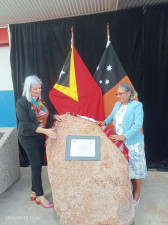
The Vice-Minister of Foreign Affairs and Cooperation, Jesuína Maria Ferreira Gomes, accompanied by the Minister for Trade, Business and Asian Relations of the Northern Territory Government, Robyn Cahill, and members of the Timorese community in Australia, attended the unveiling ceremony in Darwin on October 15th, 2026, for a commemorative plaque marking the 50th anniversary of the arrival of the first Timorese refugees in the Australian city in August 1975.
Installed at Stokes Hill Wharf, a site associated with the sea arrival of refugees from Timor, the plaque serves as a permanent record of this episode in the shared history of Timor-Leste and Australia and pays tribute to those who left Timorese territory amid the conflict and political instability of 1975.
The plaque notes that in August of that year, more than two thousand refugees from Timor arrived at Stokes Hill Wharf aboard the cargo ships Mac Dili and Lloyd Bakke after leaving the territory because of the conflict.
Australian Federal Member of Parliament Luke Gosling announced the installation of the commemorative plaque at Stokes Hill Wharf in 2025 as part of initiatives to mark the 50th anniversary of the first arrivals and to preserve the memory of this historical period.
In her address at the ceremony, Vice-Minister Jesuína Maria Ferreira Gomes expressed gratitude to the Australian people, particularly the Northern Territory authorities, for the support and assistance provided to the refugees who arrived in Darwin in August 1975. The Vice-Minister also recalled the solidarity and hospitality shown by the Australian population during a difficult period in Timor-Leste's history.
The ceremony in Darwin is part of the commemorative events marking the 50th anniversary of the arrival of the first Timorese refugees in Australia. It brings together representatives from both countries and members of the Timorese community in Australia to preserve this historical memory.