





Minister of State Administration Participates in 14th Meeting of Portuguese-Language Writers in Cape Verde
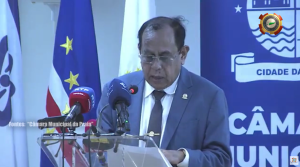
From October 8th to 10th, 2026, in Praia, Cape Verde, the Minister of State Administration, Tomás do Rosário Cabral, participated in the 14th Meeting of Portuguese-Language Writers, themed “The Portuguese Language as a Means of Adaptation in a Changing World”.
The event, organised by the Union of Portuguese-Speaking Capital Cities (UCCLA – acronym in Portuguese) in partnership with the Praia City Council, brought together writers, academics, and institutional representatives from Portuguese-speaking countries to discuss the current challenges facing the language, literature, and the circulation of cultural output.
At the official opening session on October 8th, the Minister of State Administration highlighted the Portuguese language’s historical and political significance of the Portuguese language for Timor-Leste, recalling its role during the Indonesian occupation.
“Portuguese was a language of resistance. During the occupation, its presence was one of the obstacles to the occupier’s assimilation of the Timorese people. Speaking Portuguese was also an act of resistance, through which we asserted our identity and rejected an order that denied our right to self-determination,” he stated.
Tomás do Rosário Cabral also highlighted the ongoing role of the Portuguese language in asserting Timor-Leste's identity and in its relations with other countries and regions.
“Today, in an independent State, speaking Portuguese is a way to connect with the world and showcase our culture,” he noted.
The Minister further linked the promotion of reading and literature to decentralisation and the proximity of municipal administrations to local communities.
“Decentralisation adds the dimension of proximity. Municipalities can help create conditions for books and reading to be part of community life through libraries and cultural initiatives involving schools, local authorities, and readers. It is also at this level that a lasting relationship with literature can be built, giving new generations the opportunity to discover works that match their interests and knowledge,” he said.
In his address, Tomás do Rosário Cabral also called for greater circulation of literary works across Portuguese-speaking countries and for stronger ties among authors, publishers, libraries, and cultural institutions to facilitate readers' access to works produced in different countries.
The Minister also addressed the impact of new technologies on literary creation, arguing that their development must respect authors’ rights and promote cultural diversity. He highlighted literature’s role in bringing societies together, stating that “peoples who know one another are more likely to respect each other and build relationships of friendship and cooperation”.
Tomás do Rosário Cabral also framed this cooperation within Timor-Leste’s integration into ASEAN and the potential for closer ties between the two regions.
“Timor-Leste, integrated into ASEAN, is keen to contribute to this dialogue and to foster cultural exchange between Portuguese-speaking countries and South-East Asian nations,” he stated.
On the sidelines of the 14th Meeting, the Minister of State Administration met with Cape Verde's Prime Minister, Francisco Carvalho, at the Government Palace on October 8th. The meeting addressed cooperation on training municipal administration personnel to support Timor-Leste's decentralisation process and local governance, including strengthening the use of the Portuguese language in Public Administration.
Possibilities for cooperation in education and community-based tourism were also discussed. Tomás do Rosário Cabral invited the Cape Verdean Prime Minister to attend Timor-Leste’s national celebrations marking the Restoration and Proclamation of Independence.
During his stay in Praia, the Minister also paid a courtesy visit to the Mayor of Praia, Fernando Pinto.
The 14th Meeting of Portuguese-Language Writers concluded on October 10th, with sessions covering topics such as teaching Portuguese as a second language, literature, and the challenges posed by technological transformations.