




Government Suspends Face-to-Face Classes for Three Days Amid Air Quality Concerns
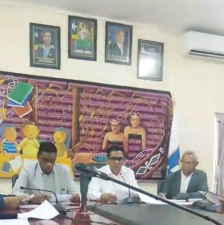
The Ministry of Education and the Ministry of State Administration have determined the temporary suspension of face-to-face teaching activities on October 15th, 16th, and 17th, 2026, throughout the national territory, as a preventive measure to protect the health of students, teachers, and other members of the educational community, given current air quality conditions.
The measure covers public, private, and cooperative establishments within the public education system, ranging from pre-school and primary and secondary schools (Years 1-9) through to general Senior Secondary School (Years 10–12) and Vocational Secondary Education.
The decision followed information from the National Directorate of Meteorology and Geophysics (DNMG – acronym in Portuguese) on deteriorating air quality linked to polluting particles from fires and burning in the region. In recent days, Dili recorded Air Quality Index (AQI) values between 165 and 174, which are considered harmful to health.
The DNMG has been monitoring the situation and has warned that concentrations of smoke and pollutants may rise again in the coming days, depending on atmospheric conditions and smoke transport from the region.
The suspension of face-to-face teaching activities also reflects the risks of exposure to these particles and the concern expressed by the President of the Republic, José Ramos-Horta, regarding the potential health effects of the current situation on children and young people.
Schools will use this Wednesday, October 14th, to prepare students for the three-day suspension of face-to-face activities. Heads of educational establishments must ensure that teachers set homework and provide guidance on monitoring home study during this period.
Between October 15th and 17th, alternative pedagogical support modalities may be adopted in accordance with guidelines from the competent services. Educational establishments must also draw up specific plans to recover teaching and learning activities.
The Ministry of Education and the Ministry of State Administration recommend that families keep children indoors unnecessarily during this period and avoid outdoor physical activities. When leaving home is necessary, the use of appropriate respiratory protection is recommended.
It is also recommended that doors and windows remain closed during periods of elevated smoke or pollutant particle concentrations, and that the burning of waste or other materials that could aggravate atmospheric pollution be avoided.
Heads of educational establishments must ensure that these guidelines are disseminated to students, teachers, staff, parents and guardians, and the wider educational community.
Schools outside the public education network and international schools are likewise recommended to take current air quality conditions and the protection of children’s health into account when defining their activities.