





Prime Minister Highlights the Role of Science and Technology in Timor-Leste's Development
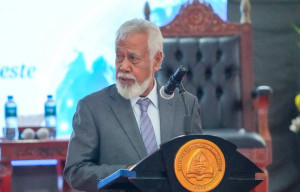
On August 24th, 2026, Prime Minister Kay Rala Xanana Gusmão attended the opening of the Science for Development Summit 2026 at the Dili Convention Centre, an event promoted by the Presidency of the Republic and supported by the Government. The Summit brings together Nobel laureates, Turing Award winners, scientists, researchers, academics, and other international experts to discuss how science, technology, and innovation contribute to development. 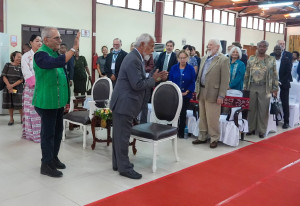
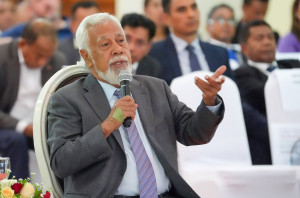
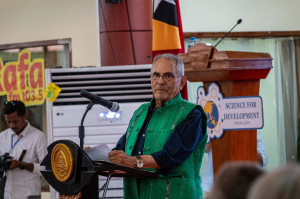
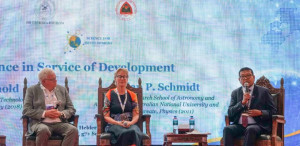
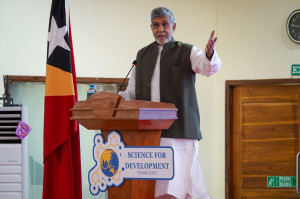
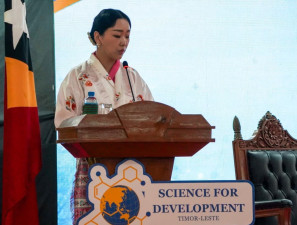
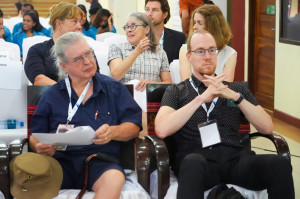
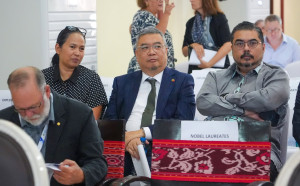
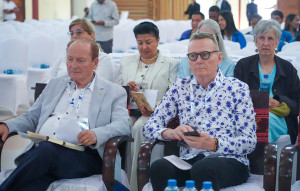
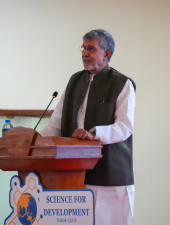
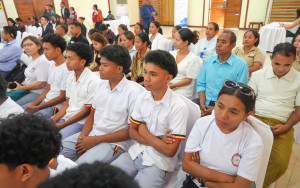
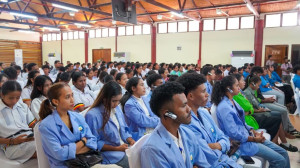
In his opening remarks, the Prime Minister framed development as Timor-Leste’s current challenge, following the struggle for sovereignty, peacebuilding, establishing democratic institutions, and building the state's foundations.
“Our people did not fight for independence just to have our own flag, a national anthem, and a seat at the United Nations. Independence must also enable us to improve our people’s lives,” stated Kay Rala Xanana Gusmão. The Prime Minister also emphasised the need for “better healthcare and education, greater food security, and more productive agriculture” as well as “an economy capable of providing jobs and opportunities for our youth.”
The Head of Government stated that Timor-Leste is pursuing its development amid a period of rapid global technological transformation, marked by advances in artificial intelligence, biotechnology, advanced computing, medicine, and other scientific fields.
“Countries that understand these changes and learn to take advantage of them will have new opportunities. Those that fail to do so risk falling even further behind. Timor-Leste cannot afford to be left behind. That is why science is so vital to our development,” he declared.
The Prime Minister also highlighted the potential of science and new technologies to help Timor-Leste address the shortage of specialised skills and technical knowledge. He stressed, however, that “nothing can replace investment in our people,” and advocated strengthening scientific and technical education and the capacity of national universities.
Regarding artificial intelligence, Kay Rala Xanana Gusmão mentioned applications that could facilitate healthcare professionals' access to medical knowledge, support access to information in mother tongues, provide scientific data to farmers, and offer new tools to young entrepreneurs.
At the same time, the Head of Government warned of the risks associated with the evolution of these technologies, particularly regarding fraud, disinformation, public trust in institutions, and state sovereignty.
“We should approach these possibilities with enthusiasm, but we also need to understand the risks. The same technology that makes knowledge more accessible can also make deception easier and cheaper,” he said. He added that “we need to understand what this could mean for our democracy and for the trust people place in public institutions.”
In this context, the Prime Minister argued that the Government must have the expertise to evaluate the technologies it adopts, so it can harness their benefits while protecting the country from new risks. “As we embrace scientific progress, we must remember that technology is a tool meant to improve human life, not to diminish what makes us human. We must continue to leave room for the poetry of life,” he said.
Addressing the international experts at the Summit, Kay Rala Xanana Gusmão called for knowledge sharing and engagement with Timorese students and researchers to foster joint reflection on national development challenges and ambitions.
“We cannot afford to remain on the sidelines of this new scientific era, but neither should we enter it blindly. This is the next stage in our struggle to shape our own future,” concluded the Prime Minister before officially opening the Science for Development Summit 2026.
The Science for Development Summit 2026, an initiative of the President of the Republic, José Ramos-Horta, will take place on August 24th and 25th at the Dili Convention Centre. It will feature panels and sessions on science and development, economic transformation, food security, health and human development, digital security, artificial intelligence, and science education. The event will run alongside the Sci-Tech Expo 2026 and other sessions organised by universities, public institutions, and partner organisations.