





Head of Government Calls for Greater Investment in Peace and International Cooperation at a G7+ and IPDAL Seminar
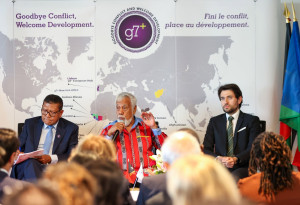
During his keynote address at the international seminar “The Impact of the War in the Middle East on Conflict-Affected States,” organised by the g7+ Secretariat in partnership with the Institute for the Promotion of Latin America and the Caribbean (IPDAL – acronym in Portuguese), the Prime Minister and Eminent Person of the g7+, Kay Rala Xanana Gusmão, called on June 24th, 2026, in Lisbon for increased international investment in peace, cooperation, and global solidarity. 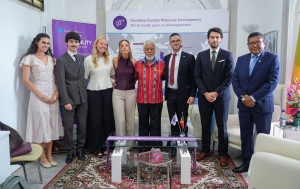
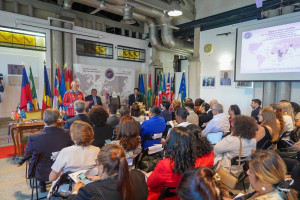
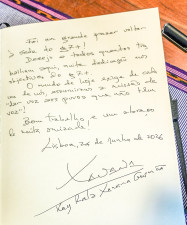
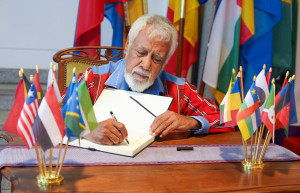
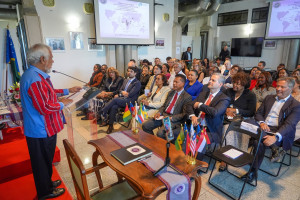
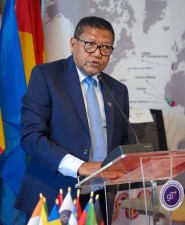
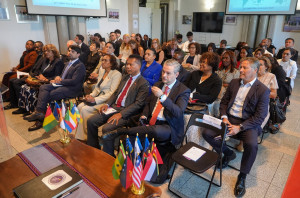
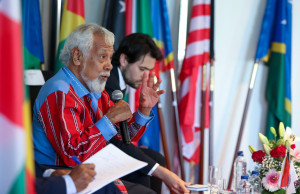
The seminar brought together diplomats, academics, policymakers, and representatives of the international community to analyse the consequences of contemporary conflicts in conflict-affected states and fragile situations. The session was opened by the Secretary-General of the g7+, Hélder da Costa, followed by remarks from the Prime Minister of Timor-Leste and a debate moderated by IPDAL.
In his remarks, Kay Rala Xanana Gusmão warned that conflicts and geopolitical tensions have effects that extend beyond the regions where they occur, disproportionately affecting the most vulnerable countries through rising energy prices, supply-chain disruptions, inflation, and a reduction in international attention and resources allocated to development.
“People in vulnerable countries often pay a heavy price for conflicts they neither started nor influenced.”
The Prime Minister also expressed solidarity with the populations affected by the conflict in the Middle East, including the Palestinian people and the Gulf countries that are facing the consequences of escalating tensions.
During his speech, he argued that the intensifying geopolitical rivalry among major powers is diverting financial resources and political attention from global challenges such as climate change, food security, public health, and the achievement of the Sustainable Development Goals.
“The resources that should be used to build peace, strengthen institutions, and educate children are now being diverted to military spending. The world has become more efficient at financing war than at investing in peace.”
The Head of the Government also highlighted Timor-Leste’s commitment to regional and multilateral cooperation through its participation in ASEAN, the Community of Portuguese-Speaking Countries (CPLP), and the g7+, noting that these organisations demonstrate that stability and prosperity can be achieved through partnership, dialogue, and solidarity among states.
Kay Rala Xanana Gusmão also shared Timor-Leste’s experience of national reconciliation after 24 years of occupation, emphasising that peacebuilding requires courage, a long-term vision, and a commitment to coexistence.
Concluding his remarks, he called for a stronger culture of dialogue and the urgent mobilisation of additional resources to promote peace.
“No one is safe until everyone else is. Peace in one place depends on peace elsewhere.”
The Secretary-General of the g7+, Hélder da Costa; ambassadors from CPLP countries; the Minister of Justice, Sérgio de Jesus Fernandes da Costa Hornai; the Minister of Education, Dulce de Jesus Soares; Timorese students in Portugal; and other guests also attended the seminar.
The meeting reaffirmed the g7+’s role as a platform for solidarity among states affected by conflict and underscored the importance of multilateral cooperation in promoting peace, resilience, and sustainable development.