




Prime Minister Strengthens Cooperation with Portuguese Judicial Institutions to Support Justice Sector Reform in Timor-Leste
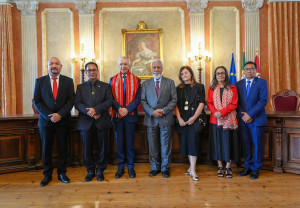
On June 23rd, Prime Minister Kay Rala Xanana Gusmão met in Lisbon with the President of the Supreme Court of Justice of Portugal, João Cura Mariano, and the Attorney General of Portugal, Amadeu Guerra—accompanied by the Deputy Attorney General, Paulo Jorge Vieira Morgado de Carvalho—to strengthen bilateral cooperation in the justice sector and support the implementation of judicial reform in Timor-Leste. 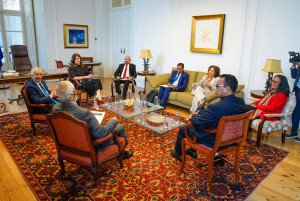
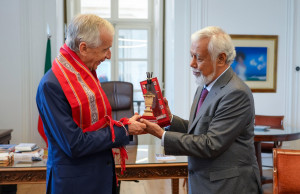
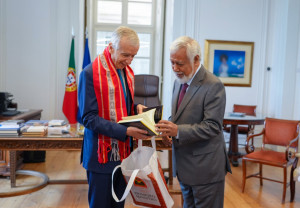
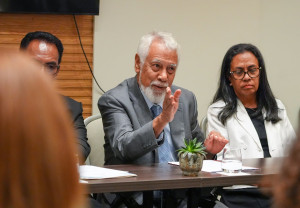
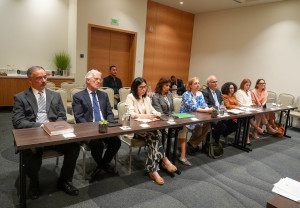
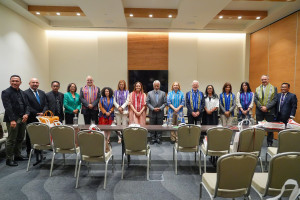
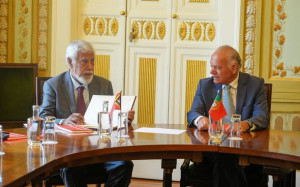
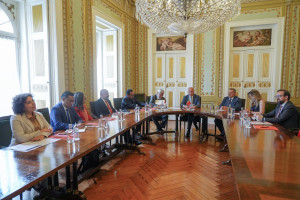
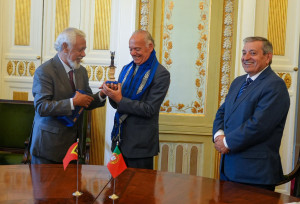
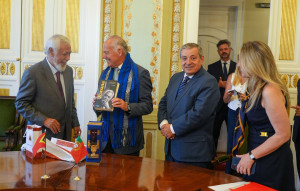
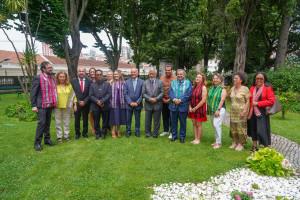
The meetings focused on developing human resources within the Timorese judicial system, strengthening judicial institutions, training judges, prosecutors, public defenders, and other professionals in the sector, and sharing institutional experience between the two countries. The meetings are part of the Government’s efforts to consolidate the rule of law and strengthen the capacity of national judicial institutions.
During the meeting with the President of the Supreme Court, the institution reaffirmed its commitment to continuing support for Timor-Leste in specialised training, technical assistance, and judicial cooperation. The discussions also focused on preparing a new generation of Timorese legal professionals, including support for law students currently studying at Portuguese universities, as part of the justice sector's human resources development strategy.
During the meeting with the Attorney General’s Office of Portugal, the two delegations discussed strengthening cooperation between the public prosecutors’ offices of the two countries, training for public prosecutors, criminal investigations, and the strengthening of the Public Defender’s Office. The parties also expressed their willingness to deepen institutional cooperation to meet the needs of the Timorese justice system.
During these meetings, the Prime Minister argued that it is “necessary to strengthen the Public Defender’s Office’s capacity as a key component in ensuring citizens’ access to justice.” He also emphasised that “ongoing dialogue between the judicial institutions of Timor-Leste and Portugal will help ensure that cooperation programmes are effective and address the real needs of Timor-Leste’s justice system.”
At the meeting with the Supreme Court of Justice, the Head of the Government emphasised that “the President of the Supreme Court of Justice of Portugal demonstrated a deep understanding of the situation in Timor-Leste and pledged to continue supporting justice sector reform through advisory services, training, and the sharing of best judicial practices.” He added that “justice is the foundation of a nation’s peace, progress, and stability.”
The Minister of Justice, Sérgio da Costa Hornai; the Ambassador of Timor-Leste to Portugal, Manuel de Araújo Serrano; the Coordinator of the Working Group on Justice Reform, Lúcia Lobato; and the Director-General of Justice Policy, Nelinho Vital, accompanied the Prime Minister.
As part of the same working visit to Portugal, the Prime Minister, accompanied by Portugal’s Minister of the Presidency, António Leitão Amaro, visited the Imprensa Nacional-Casa da Moeda de Portugal (National Printing Office and Mint of Portugal) to explore solutions for digitising public administration and securing documents. The visit provided an opportunity to learn about Portugal’s systems for the secure issuance of official documents and to identify opportunities for cooperation in modernising identification and documentation systems in Timor-Leste.
At the same time, the Minister of Justice, Sérgio da Costa Hornai, met with the Portuguese Minister of Justice, Rita Alarcão Júdice, and the Director of the Centre for Judicial Studies, Appellate Judge Edgar Taborda Lopes, to strengthen bilateral cooperation in judicial training, human resources development, and the modernisation of the justice system. The Minister of Education, Dulce de Jesus Soares, who was also part of the national delegation, met with Portugal’s Minister of Education, Science, and Innovation, Fernando Alexandre, to discuss bilateral cooperation in the education sector, particularly within the framework of the School Learning and Training Centres (CAFE) Project.
As part of efforts to strengthen cooperation for the development of the justice sector, the Head of the Government met with officials from various Portuguese institutions of higher education and specialised training, including the Portuguese Catholic University, the New University of Lisbon, and the law schools of the Universities of Porto, Coimbra, and Minho, as well as with the President of the National Institute of Legal Medicine and Forensic Sciences. During these meetings, there was a willingness to support human resource training and development in the justice sector in Timor-Leste.
The Prime Minister’s official schedule in Portugal also included an audience with the President of the Portuguese Republic, António José Seguro; a visit to the headquarters of the Community of Portuguese-Speaking Countries (CPLP); a visit to the Mário Soares Foundation, where the importance of preserving historical memory and promoting democratic values was highlighted; participation in the 5th Annual Conference of the Portuguese Institute of the Law of the Sea (IPDM), dedicated to the planning and management of maritime space; the awarding of the Professor Jorge Miranda Award: Constitution and Human Rights, presented by the Faculty of Law of the University of Lisbon; and participation in an international seminar organised by the Institute for the Promotion of Latin America and the Caribbean (IPDAL) and the g7+, dedicated to the impact of the crisis in the Middle East on countries affected by conflict.