




Prime Minister Highlights the Role of the Law of the Sea and the Blue Economy at the Annual Conference of the Portuguese Institute of the Law of the Sea
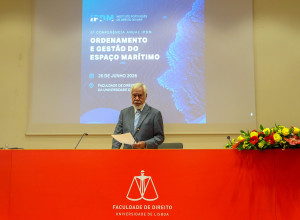
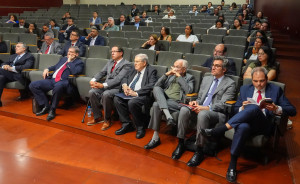
On June 26th, 2026, Prime Minister Kay Rala Xanana Gusmão attended the 5th Annual Conference of the Portuguese Institute of the Law of the Sea (IPDM – acronym in Portuguese) at the University of Lisbon’s School of Law, which was dedicated to the theme “Planning and Management of Maritime Space.” In his remarks, he presented Timor-Leste’s experience in applying the Law of the Sea, peacefully resolving maritime disputes, and promoting the Blue Economy as a strategic pillar of the country’s sustainable development.
The Head of the Government stated that it is “with particular satisfaction that, four years after the First IPDM Conference, [he] is once again participating in this fifth conference, also in his capacity as Honorary President of this institution.” 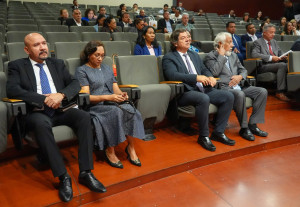
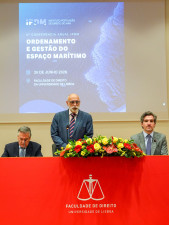
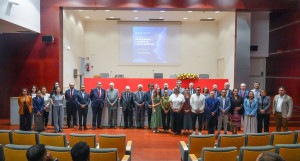
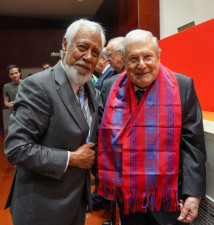
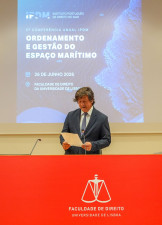
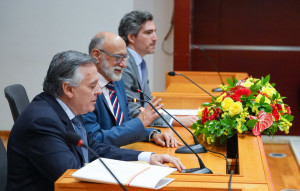
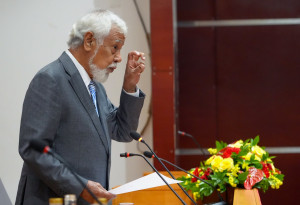
During his remarks, he recalled that Timor-Leste’s journey—from independence to the final delimitation of its maritime borders with Australia—was the result of the determination of the Timorese people and the support of the international community. In this context, he stated that “the credit for the path Timor-Leste has taken (...) belongs solely to the Timorese people,” adding that “Timor-Leste’s experience demonstrates that international solidarity and the international system, when used with courage, a sense of justice, and good faith, can serve the smallest and most fragile countries and contribute decisively to peace and stability.”
In discussing the United Nations Convention on the Law of the Sea (UNCLOS), the Prime Minister highlighted its role in resolving disputes over Timor-Leste’s maritime boundaries with Australia and, currently, with Indonesia. He also emphasised that this legal instrument continues to address contemporary challenges, including climate change, marine pollution, and biodiversity loss.
In this regard, he recalled that “Timor-Leste, for the first time in the history of the Convention, resorted to the mandatory conciliation mechanism to resolve its maritime boundary dispute with Australia,” and expressed the hope that this experience might inspire other peaceful solutions to maritime disputes in the region.
The Prime Minister also called for deeper cooperation among neighbouring countries “in areas such as fisheries, navigation, marine conservation, and maritime safety—issues that directly affect the livelihoods and well-being of all peoples, particularly those of neighbouring countries.”
In the area of the Blue Economy, he presented the “Policy and Action Plan for Promoting a Resilient and Sustainable Blue Economy 2025–2035,” which the Government approved this year, noting that the document serves as the national roadmap for implementing the Blue Economy.
“With this decision, the Government—which I am responsible for leading—is clearly embracing a strategic vision to transform the sea, part of our identity and an essential economic and geopolitical asset, into a source of sustainable development, social inclusion, and environmental resilience,” he said.
The Head of Government also emphasised that Timor-Leste lies at the heart of the Coral Triangle, one of the regions with the greatest marine biodiversity in the world, and warned of threats posed by climate change, rising sea levels, pollution, and illegal fishing. He therefore called for strengthened international cooperation and increased investment in marine scientific research, “combining science with the traditional knowledge of our communities.”
Towards the end of his remarks, he welcomed the participation of 14 young East Timorese in the Summer School on maritime spatial planning and management, organised as part of the conference, noting that this initiative is “a concrete example of genuine cooperation among institutions, so that all countries can develop knowledge and technical skills in this sector.” He also expressed his hope that “these young people [from Timor-Leste], as well as all the other graduates of this course, will return truly inspired and committed to applying the knowledge they have acquired here—in its legal, scientific, technical, and social dimensions—in their home countries, in the service of responsible ocean governance and sustainable and inclusive development.”
The conference also featured remarks from Portugal’s Secretary of State for Fisheries and the Sea, Salvador Malheiro; the Dean of the Faculty of Law at the University of Lisbon, Professor Eduardo Vera-Cruz Pinto, PhD.; Professor José Manuel Sérvulo Correia, Ph.D.; Professor Carlos Blanco Morais, PhD; and the President of the IPDM, Professor Vasco Becker-Weinberg, PhD. Also participating in the session were the Minister of Education, Dulce de Jesus Soares; the Ambassador of Timor-Leste to Portugal, Manuel António Araújo Serrano; and the Chief of Staff to the Prime Minister, Elizabeth Exposto.