





Minister of Social Solidarity and Inclusion pays institutional visits to Indonesia to strengthen social policies
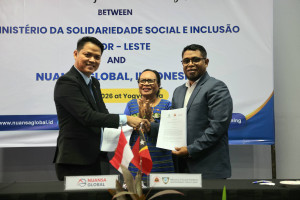
The Minister of Social Solidarity and Inclusion, Verónica das Dores, paid a series of institutional visits to Indonesia from April 10th to 16th, 2026, as part of a visit that included signing a cooperation agreement with Nuansa Global in Yogyakarta to strengthen the technical skills of the Ministry’s staff.
In addition to the signing ceremony for the aforementioned agreement, the visit provided an opportunity to observe, firsthand, various models of social intervention focused on the protection of vulnerable groups, rehabilitation, and social inclusion. 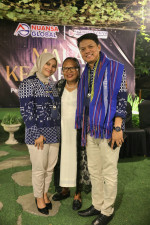
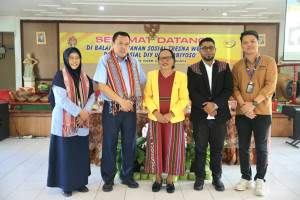
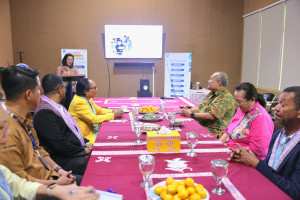
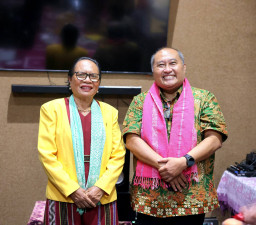
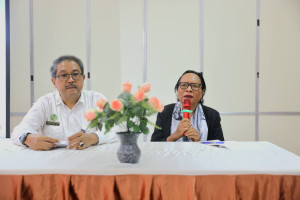
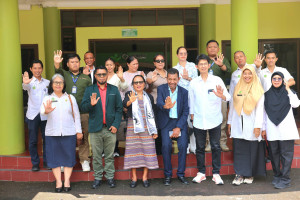
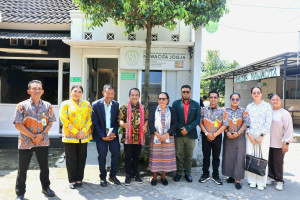
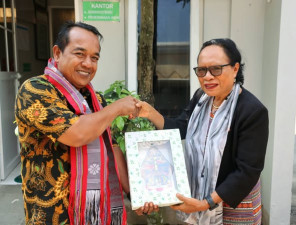
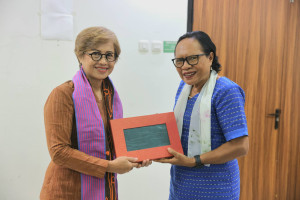
On April 14th, Minister Verónica das Dores visited the Tresna Werdha Abiyoso Social Services Centre in Yogyakarta, where she observed services for older adults, including care, support, and well-being programmes. During the visit, she met clients and staff, emphasising the importance of strengthening social responses to ageing with dignity.
Later that day, she visited the YAKKUM Rehabilitation Centre, where she learned about programmes supporting people with disabilities, including physical therapy, rehabilitation, and social reintegration services. The Minister emphasised her interest in adapting the best practices she observed to the Timorese context to develop inclusive services.
On April 15th, the schedule included visits to the Nawacita Private Drug Rehabilitation Centre and the Grhasia Diskes Mental Health Hospital, both in Yogyakarta. During these visits, the Minister observed treatment and rehabilitation programmes for people with substance use disorders and mental health conditions and discussed with technical staff the challenges related to service sustainability, human resources, and social reintegration. She emphasised the importance of an integrated and humanised approach to the treatment and care of patients.
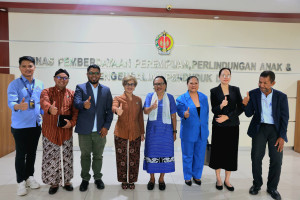
On April 16th, the Minister visited the Directorate for Strengthening Community-Based Management of Women’s and Children’s Protection and Care in Yogyakarta, where programmes to promote women’s rights and child protection were discussed. The meeting provided an opportunity to exchange experiences and identify areas for cooperation to develop more inclusive and sustainable social policies.
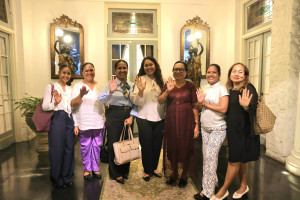
On the same day, he attended a social dinner with representatives from Nuansa Global, during which certificates were presented to participants in the training programmes. The event helped to strengthen institutional cooperation and reinforce ties between the two organisations.
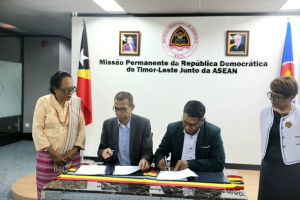
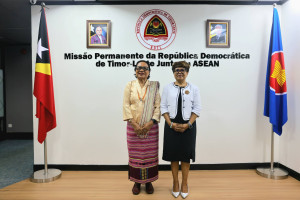
At the start of her visit to Jakarta, the Minister met with Elisa Maria da Silva, Ambassador of the Permanent Mission of Timor-Leste to ASEAN, and Roberto Sarmento de Oliveira Soares, Timor-Leste’s Ambassador to Indonesia. The meetings covered Timor-Leste’s participation in the ASEAN Socio-Cultural Community and institutional coordination in the social sector. The Minister also attended the signing ceremony for the terms of delivery and receipt of goods for the operation of the Permanent Mission to ASEAN.
Taken together, these activities deepened understanding of different models of social service delivery and helped identify best practices to support the development of public policies in Timor-Leste focused on social inclusion, the protection of vulnerable groups, and the improvement of service quality for the population.