





High-Level Dialogue Discusses Timor-Leste’s Integration into ASEAN and National Development Priorities
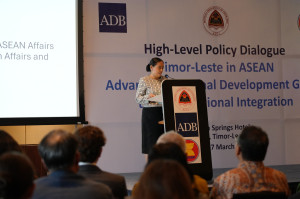
The Ministry of Foreign Affairs and Cooperation, in its role as the National Secretariat of ASEAN, is organising a High-Level Policy Dialogue on March 26th and 27th, 2026, in Dili, under the theme “Timor-Leste in ASEAN: Promoting National Development Goals through Regional Integration,” in partnership with the Asian Development Bank and the ASEAN Secretariat. 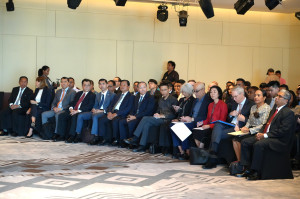
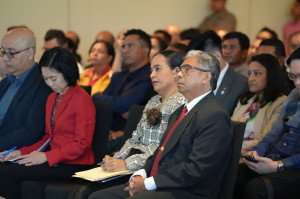
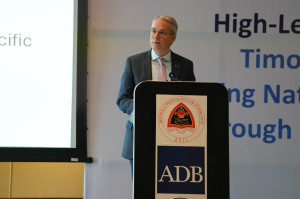
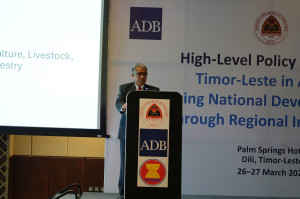
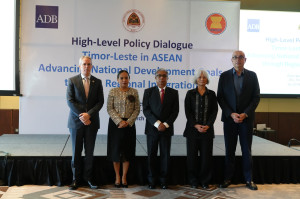
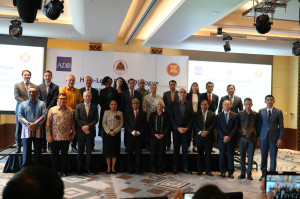
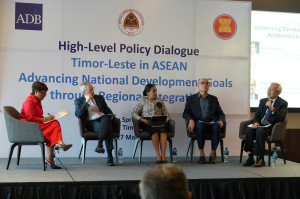
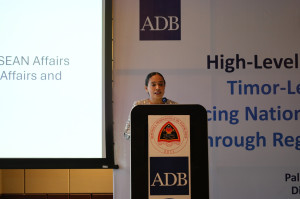
This initiative is part of Timor-Leste’s accession to ASEAN on October 26, 2025, and aims to align national policies with regional mechanisms to achieve economic and developmental outcomes.
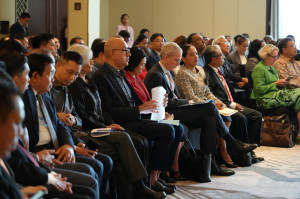
The dialogue brought together government officials, representatives from ASEAN member states and the ASEAN Secretariat, development partners, the private sector, and regional experts to discuss measures to promote regional integration, strengthen institutional capacity, and support economic growth.
At the opening session, Marcos da Cruz, Minister of Agriculture, Livestock, Fisheries, and Forests, stressed the importance of aligning national reforms with regional opportunities to enhance competitiveness and resilience.
Milena Rangel, Vice Minister for ASEAN Affairs, emphasised the importance of a coordinated approach between public institutions and civil society to guarantee Timor-Leste’s full participation in ASEAN mechanisms.
Scott Morris, Vice President of the Asian Development Bank for East Asia, Southeast Asia, and the Pacific, reaffirmed the institution’s support for Timor-Leste, particularly through initiatives in infrastructure, connectivity, capacity building, trade facilitation, and private-sector development.
During the working sessions, topics such as economic diversification, trade and investment, human capital development, infrastructure and connectivity, and the strengthening of the private sector were discussed. Structural challenges were also examined, including limitations in institutional capacity and gaps in infrastructure.
The National Roadmap for the Implementation of the ASEAN Economic Community 2026–2030 was also presented, highlighting priorities and measures to support Timor-Leste’s integration into regional economic mechanisms.
The programme also included sessions to share experiences with representatives from ASEAN member states, including Cambodia and the Lao People’s Democratic Republic, as well as a dialogue with the private sector featuring the Chamber of Commerce and Industry of Timor-Leste, micro, small, and medium-sized enterprises, and entrepreneurs.
The meeting enhanced institutional coordination and gathered input to develop public policies on regional integration.