





6th International Geoscience Conference discusses scientific contribution to the development of Timor-Leste
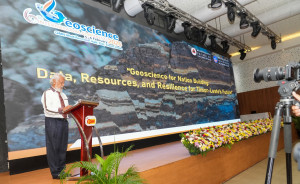
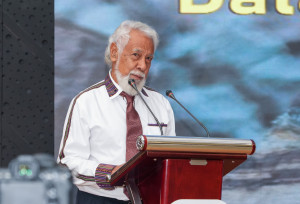
On February 5th, 2026, Prime Minister Kay Rala Xanana Gusmão chaired the opening session of the 6th International Conference on Geosciences, organised by the Timor-Leste Institute of Geosciences (IGTL), which is also taking place today, February 6th, in Dili. 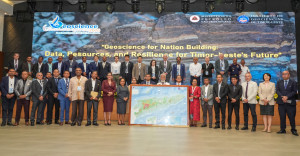
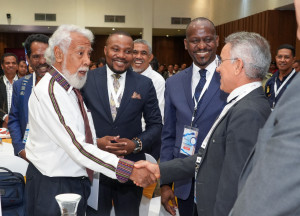
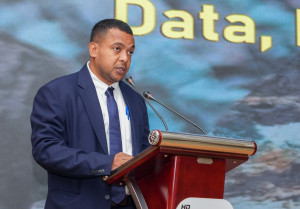
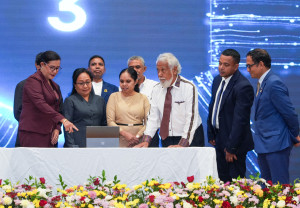
Under the theme “Geosciences for Nation Building: Data, Resources, and Resilience for the Future of Timor-Leste,” the conference brought together researchers, academics, industry experts, policymakers, and representatives from national and international institutions to discuss the contribution of geosciences to national development, the sustainable management of natural resources, and the strengthening of national resilience.
In his opening remarks, the Head of the Government emphasised that “although Timor-Leste is a young nation, we are a country with a long history,” and that “the Timorese have always lived in close relationship with their land and their seas.”
“It was this deep connection to the land and the sea that sustained our people over the centuries, through conflict, exploitation, and the years of the Resistance,” he said, adding that “now that we are twenty-four years into the Restoration of Independence, our ancestral connection to the land must be complemented by scientific knowledge.”
The Prime Minister recalled that, 24 years after the Restoration of Independence, Timor-Leste has established “a democratic and peaceful state,” guided by the 2011–2030 Strategic Development Plan, which “identifies three strategic industries on which to base our future: tourism, agriculture, and oil and natural resources”.
Xanana Gusmão emphasised the importance of maritime sovereignty and recalled the mandatory conciliation process under the United Nations Convention on the Law of the Sea, which secured maritime borders with Australia, as well as ongoing negotiations with Indonesia. “Our nation's sovereignty is not only inherited from history; it is sustained by knowledge, discernment, and responsibility,” he said.
Regarding the Greater Sunrise project, he reiterated that “the government’s position has always been clear: natural gas from Greater Sunrise must be processed onshore, in Timor-Leste,” adding that the project “will deliver national benefits, including employment, long-term revenues, and the establishment of an industrial base along our southern coast.”
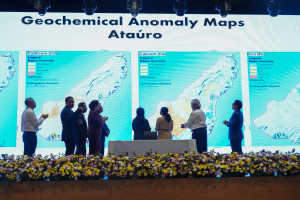
On the first day, the conference featured a high-level panel dedicated to the role of national geological services in state-building, with contributions from representatives from Portuguese-speaking countries and the Asia-Pacific region. The IGTL also presented new geological and geochemical maps, including the map of Maliana and maps of geochemical anomalies in Oe-Cússe Ambeno, Ataúro, and other regions.
The second day focused on geological mapping, mineral resources, and the energy sector, with sessions on responsible exploration, natural resource governance, geological risk mitigation, and the role of geosciences in economic growth. Experts from Portugal, the United Kingdom, Mozambique, Australia, Brazil, Indonesia, and regional organisations participated.
For the Head of Government, the role of IGTL is central to this process, promoting geological research and generating scientific knowledge at the service of the State and the Timorese people. “Without this knowledge, there can be no true sovereignty over our natural resources,” he said.
At the international level, he emphasised that “international cooperation is a strategic necessity for our country,” referring to collaboration with universities and research centres as a means to “accelerate learning, share experiences, adopt best practices, and avoid mistakes already made in other contexts.”
At the end of his remarks, the Prime Minister reaffirmed the government's commitment to investing in science and training national technical staff. “We want young Timorese trained in geosciences, engineering, the environment, and energy,” he said, emphasising that knowledge must translate into “decisions that improve lives, protect communities, and create jobs.”
Lastly, he left a message for the future, stating that “Timor-Leste is committed to a path of inclusive and sustainable development, grounded in knowledge, reinforced by cooperation, and guided by long-term national priorities.”
“The choices we make regarding our land and our seas will shape the country we will become,” he concluded, expressing his conviction that “this Conference will help inform those choices and contribute to the future of our nation over the next twenty-four years and beyond.”