




Government of Japan funds capacity-building project for agricultural technical training schools in the eastern region of the country
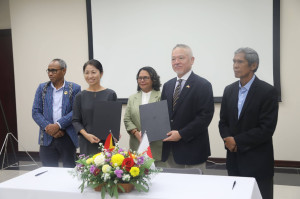
On 27 January 2026, at the Embassy of Japan in Dili, the grant agreement for the project “Capacity Building Project for Agricultural Technical Training Schools in Eastern Timor-Leste” was signed. The project is funded by the Government of Japan and implemented by the Japanese NGO PARCIC. 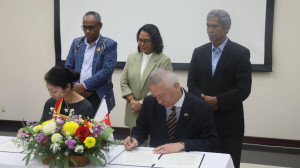
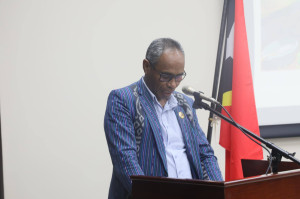
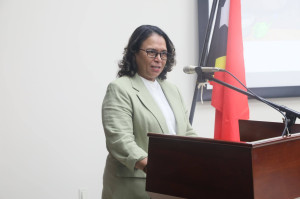
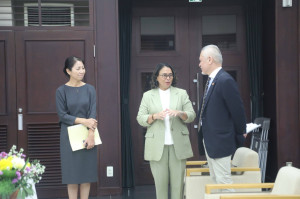
The agreement, signed by the Ambassador of Japan to Timor-Leste, Yamamoto Yasushi, and by the PARCIC representative, Ito Junko, was witnessed by the President of the Baucau Municipal Authority, Veneranda E. M. Lemos Martins, the Director-General of Technical Schools of the Ministry of Education, Deolindo da Cruz, and the Director-General of Agriculture, Coffee and Industrial Crops of the Ministry of Agriculture, Livestock, Fisheries and Forestry, Martinho Laurentino Soares.
With a total budget of approximately USD 340,000, the project will begin its first phase in March 2026 and will run for two years (2026–2028). The intervention foresees activities carried out in coordination with private agricultural schools and technical centres in the eastern region of the country, including basic laboratory soil analysis, the production of agricultural inputs (soil improvement materials) based on local and natural resources, outreach activities with farmers, and training in business management, ranging from production practices to the distribution of agricultural inputs, with support for the development of business ideas in the sector. In its first year, the project will work in partnership with the Baucau Community Development Centre (CDC).
PARCIC, a Japanese NGO present in Timor-Leste since 2002, develops projects with rural communities in the areas of production and value addition of local products, including initiatives related to coffee, food processing and nutrition, in cooperation with community groups in several municipalities.