




National Sandalwood and Forest Day celebrated with a reforestation initiative in Atabae
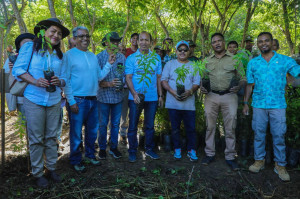
On January 13th, 2026, the Ministry of Agriculture, Livestock, Fisheries, and Forestry, through the Secretariat of State for Forestry, celebrated the 9th National Sandalwood and Forest Day by planting hundreds of trees at the Atabae Administrative Post in the municipality of Bobonaro. 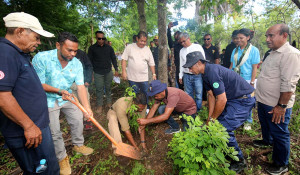
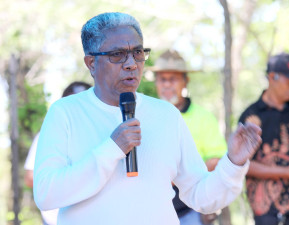
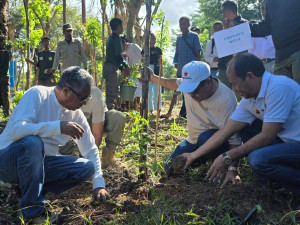
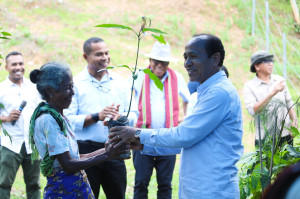
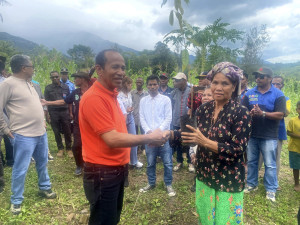
The initiative took place within the scope of Government Resolution No. 11/2017, which established January 13th as National Sandalwood and Forest Day, recognising sandalwood as an emblematic plant of national value and the central role of forests in maintaining a healthy environment, conserving animal and plant diversity, and supporting economic development.
This year's celebration took place under the theme “Let's work together to conserve and preserve sandalwood as a way of valuing sandalwood as a national identity and resource of Timor-Leste” and included the symbolic planting of around 600 sandalwood trees across a total area of 175 hectares.
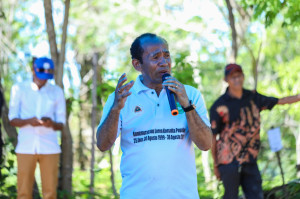
In his speech, the Secretary of State for Forestry, Fernandino Vieira da Costa, stated that the Government had decided to link National Sandalwood Day with National Forest Day, recognising the forestry sector as crucial for protecting the territory, mitigating the effects of climate change, and promoting sustainable development. He also emphasised that forest preservation is a direct response to environmental risks and natural disasters associated with ecosystem degradation.
The Secretary of State also noted that, under the mandate of the 9th Constitutional Government, around 500,000 trees have already been produced, distributed, and planted in critical areas and on plantations intended for investment, as well as in communities, urban areas, public institutions, and along roads, to strengthen vegetation cover and improve environmental conditions.
The Minister of Agriculture, Livestock, Fisheries, and Forestry, Marcos da Cruz, stated that forests play a central role in the country's production systems, emphasising their direct relationship with water availability, food security, and soil protection. He also noted that ongoing reforestation programmes aim to conserve natural resources, prevent flooding and erosion, and create economic opportunities for local communities.
The Minister called for the active participation of communities and local authorities in protecting reforested areas, including new sandalwood plantations, to ensure their sustainability and future economic benefits for families and the state.
The Minister of Agriculture, Livestock, Fisheries, and Forestry, the Vice Minister of Infrastructure, the Secretaries of State for Forestry, Fisheries, and Livestock, representatives from the Bobonaro Municipal Authority, security forces, industry leaders, development partners, local authorities, and community members attended the ceremony.
As part of its reforestation and tree-planting initiatives, on January 12th, 2026 the Ministry of Agriculture, Livestock, Fisheries, and Forestry launched a programme in Metinaro, in the municipality of Dili, to plant more than 4,000 trees, aimed at restoring degraded areas and strengthening reforestation and agroforestry initiatives. The following day, January 13th, it also launched an initiative to plant 1,800 durian trees across an area of approximately 18 hectares in Ainaro, in the municipality of Ainaro.