




Government launches road traffic control system, audible signals, and public transport stops in Dili
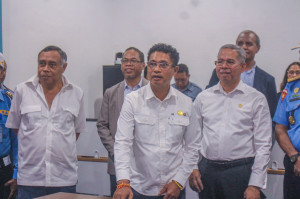
On October 20th, 2025, the Government, through the Ministry of Transport and Communications and the National Land Transport Directorate (DNTT Portuguese acronyms), held the official launch ceremony for the new road traffic control system, audible signals, and public transport stops in Dili, with the aim of improving urban mobility and enhancing road safety in the capital. 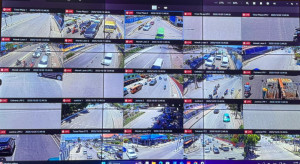


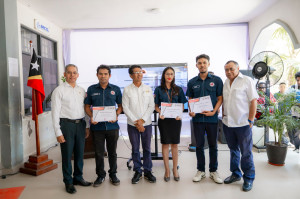
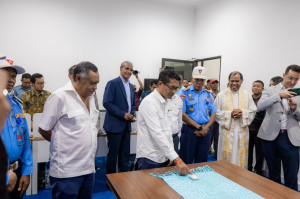
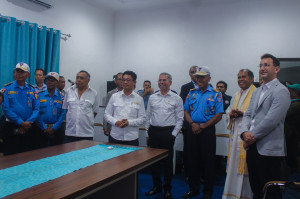
The event, which took place at the DNTT premises in Balide, was chaired by Vice-Prime- Minister and Minister Coordinator for Social Affairs Mariano Assanami Sabino, representing Prime Minister Kay Rala Xanana Gusmão, and was attended by Minister of Transport and Communications Miguel Marques Gonçalves Manetelu and Minister of Planning and Strategic Investment Gastão de Sousa.
In his speech, the Minister of Transport and Communications stated that the main objective of this initiative is to “build a safe, comfortable, inclusive, and modern transport system,” emphasizing that the Government remains committed to developing adequate infrastructure and road signage throughout the country, especially in urban areas, where the increase in the number of vehicles requires effective traffic management measures.
The new traffic control system integrates modern real-time monitoring and data collection technology, including vehicle classification detectors, license plate recognition, and registration sensors, enabling detailed reports on traffic flow and traffic rule violations in areas equipped with the new smart traffic lights.
Traffic lights will also include audible signals, allowing visually impaired people to crossroads more safely. “This innovation reinforces the inclusive nature of the system, helping to reduce accidents and promote a culture of respect for pedestrians and people with special needs,” said Minister Miguel Manetelu.
The new public transport stops, spread across ten strategic locations in the capital—including Comoro, Timor Plaza, Vila Verde, Caicoli, and Matadouro—aim to provide greater comfort and safety for passengers, better organize public transport circulation, and reduce urban traffic congestion.
Minister Miguel Manetelu emphasized that this ceremony symbolizes a “collective commitment to transform the culture of traffic management, reinforcing citizens' civic awareness when driving vehicles or motorcycles on Dili's urban roads.” He also called on “drivers, public transport operators, and the community at large to continue to cooperate by complying with traffic laws and road signs to ensure that this new system works efficiently and safely for everyone.”
Vice Prime-Minister Mariano Assanami Sabino congratulated the technical team from the Ministry of Transport and Communications and the DNTT for implementing the system, emphasizing that it will enable more efficient management of cars and motorcycles traffic in Dili, reducing accidents and congestion.
Vice Prime-Minister Mariano Assanami Sabino congratulated the technical team from the Ministry of Transport and Communications and the DNTT for implementing the system, emphasizing that it will enable more efficient management of cars and motorcycles traffic in Dili, reducing accidents and congestion. He also called on the DNTT to strengthen the training of citizens applying for a driver's license, ensuring that they understand good practices for the responsible use of public roads, respect for traffic signs, and the rights of pedestrians, especially people with disabilities who use wheelchairs or mobility aids.
With the launch of this system, the Government reaffirms that the development of the land transport sector is a strategic priority, as set out in the 9th Constitutional Government Program, which establishes the goal of “creating conditions for economic growth by improving and increasing the movement of people and goods.” In this regard, the Executive will continue to “promote the development of public and private land transport, including the development of infrastructure and support facilities,” as well as ensuring “adequate road signage and compliance throughout the country.”