On July 14th, 2026, the National Parliament approved, in a final overall vote, Law Proposal No. 22/VI (2nd) – General Framework for the Financial System and Banking Activities, with 51 votes in favour, no votes against, and six abstentions. The plenary session was presided over by the President of Parliament, Maria Fernanda Lay, and attended by the Vice-Minister of Finance, Regina de Jesus de Sousa; the Governor of the Central Bank of Timor-Leste (BCTL), Hélder Lopes; and the Vice Minister for Parliamentary Affairs, Adérito Hugo da Costa. 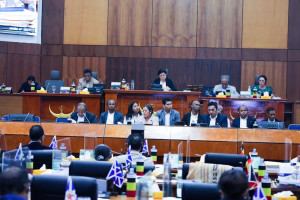
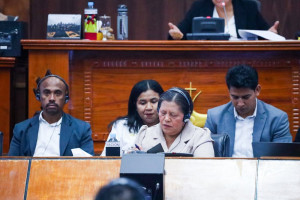
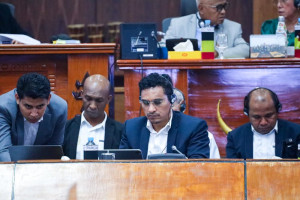
The passing of this law constitutes a structural reform of the national financial system, replacing the legal framework in force since 2000 and establishing a new legal regime for the financial and banking sectors, adapted to developments in the national economy and to international standards for financial supervision and regulation.
The new framework strengthens the Central Bank of Timor-Leste’s regulatory, supervisory, and enforcement powers, introduces measures to enhance financial stability, establishes the Resolution Fund and the Deposit Insurance Fund, and, for the first time, sets out the legal framework for development banks. The law also strengthens measures to prevent and combat money laundering and terrorist financing, and to protect consumers, depositors, and investors.
On behalf of the Government and the Central Bank of Timor-Leste, the Vice Minister of Finance thanked the National Parliament for its consideration of the draft law, for the constructive debate, and for the sense of responsibility shown throughout the legislative process.
The Vice Minister emphasised that the passage of the law proposal “represents not only the adoption of a law but also a joint commitment between the Government and the National Parliament to strengthen confidence, stability, and the modernisation of the national financial system.” She also thanked members of Parliament for their contributions, suggestions, and recommendations, which helped refine the legislation to address the country’s current challenges and future needs.
The Governor of the Central Bank of Timor-Leste emphasised that the new law modernises and consolidates the legal framework governing banking and non-banking financial institutions, thereby strengthening the Central Bank’s supervisory capacity, promoting greater financial system stability, and aligning Timor-Leste with international standards on prudential regulation, risk management, and the prevention of money laundering and terrorist financing.