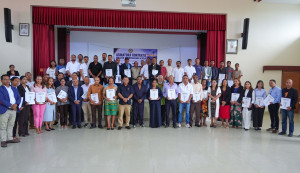
On May 12th, 2026, Prime Minister Kay Rala Xanana Gusmão presided over the signing ceremony in Dili for contracts between the Timor-Leste Public Electricity Company (EDTL, EP) and 51 national companies to implement electrification projects in 141 hamlets across various municipalities in the country that still lack access to electricity. The ceremony was also attended by the Minister of Public Works, Samuel Marçal; the Vice Minister for Infrastructure, Júlio do Carmo; and the Secretary of State for Electricity, Water, and Sanitation, Santos Noronha. 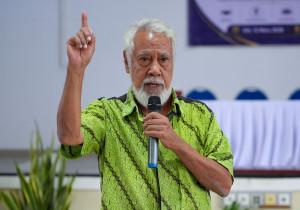
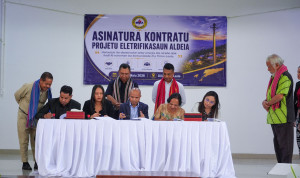
The contracts are part of the Timor Naroman Program and represent a total investment of more than US$11.7 million. The projects are expected to benefit more than 7,000 households directly and will take between six and eight months to complete, depending on the location and scope of the interventions.
During the ceremony, the Prime Minister urged the contracted companies to carry out the projects directly, without subcontracting, arguing that implementing the projects should help strengthen the technical and operational capacity of domestic companies.
The Prime Minister also emphasised that the national electrification policy is set out in the 2011–2030 National Strategic Development Plan, which defines electricity as a basic prerequisite for economic development and for improving the population’s living conditions. He noted that the plan includes expanding the distribution network to connect villages and hamlets to the power grid and developing renewable energy sources, including solar, hydro, wind, and biomass.
The main objective of the electrification policy is to ensure nationwide access to electricity, guarantee a stable, continuous energy supply, and support economic growth, industry, education, and healthcare, thereby reducing poverty and isolation in rural areas.
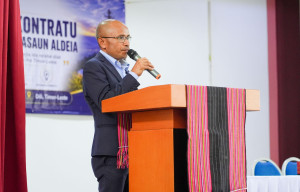
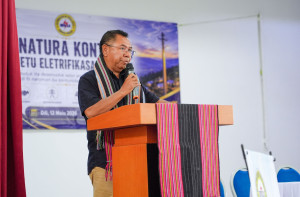
In his remarks, the Minister of Public Works explained that the Government completed the electrification of villages in 2025 and that the current phase aims to extend coverage to hamlets. He also noted that of the 181 hamlets still without electricity, the recently signed contracts now cover 141, and new contracts for the remaining 45 hamlets will be signed shortly.
Paulo da Silva, Chairman of the Executive Board of EDTL, EP, also reiterated his call for the winning companies to take direct responsibility for carrying out the work and for meeting the deadlines and quality standards set out in the contracts.
During the ceremony, the Minister of Public Works also discussed other projects currently in the planning stages in the energy sector, including the implementation of solar photovoltaic power plants and wind energy projects, as well as the future inauguration of the Comoro Substation and the underground electrical distribution system in Dili.
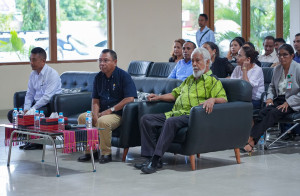
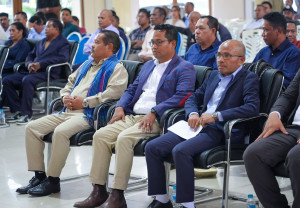
EDTL, EP executives, representatives of institutions under the Ministry of Public Works, and representatives of the contracted companies also attended the ceremony.