Marco da Cruz, Minister of Agriculture, Livestock, Fisheries, and Forestry, is leading Timor-Leste’s delegation at the 38th United Nations Food and Agriculture Organisation (FAO) Regional Conference for Asia and the Pacific (APRC38). He presented the national priorities for transforming agri-food systems and reinforced the national commitment to food security. The conference is taking place from April 20th to 24th, 2026, in Bandar Seri Begawan, Brunei Darussalam. The Senior Officials’ Meeting was held from April 20th to 22nd, followed by the Ministerial Session on April 23rd and 24th. 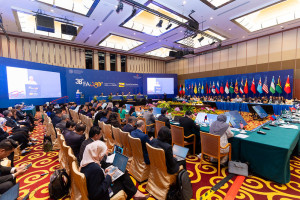
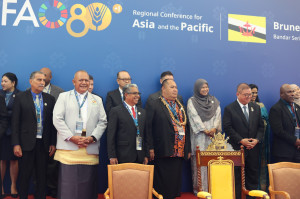
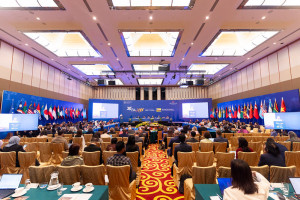
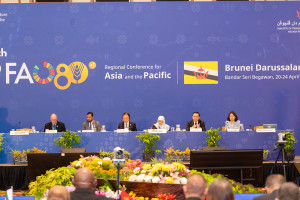
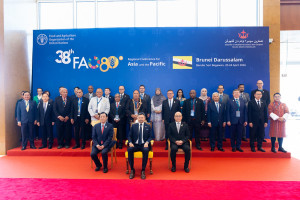
APRC38 brings together representatives from 46 countries in the Asia-Pacific region to discuss policies and strategies for food security, sustainable agricultural development, and the resilience of agri-food systems amid challenges such as food insecurity, climate change, market volatility, and geopolitical pressures.
In his remarks, the Minister emphasised that, as agriculture underpins the national economy, Timor-Leste has identified the following priorities: strengthening climate resilience, promoting nutrition and sustainability, and improving market access. In this context, he highlighted investments in resilient crops, water resource management—including dams and irrigation systems—the promotion of organic farming, and the strengthening of rural infrastructure to facilitate the distribution of produce and reduce losses.
The Minister also emphasised the need to strengthen national capacity to address the sector’s structural challenges, including financial and technical constraints, and highlighted the importance of international support, technology transfer, and innovative financing mechanisms to accelerate agricultural transformation.
During the ministerial roundtable on the “One Health” approach and the Global Partnership Program on Transboundary Animal Diseases (GPP-TAD), Marco da Cruz emphasised that the proximity of rural communities to animals in Timor-Leste requires an integrated approach to disease prevention and control. He advocated strengthening surveillance systems, veterinary services, and regional cooperation to protect animal and public health.
During the conference, the Timorese delegation also participated in sessions on innovation for food security, investment in agri-food systems, the blue economy, and regional integration. It held bilateral meetings with international partners to explore opportunities for cooperation across the agriculture, fisheries, livestock, and forestry sectors.