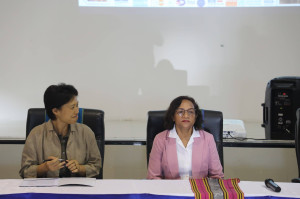
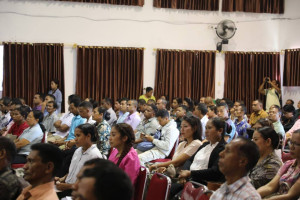
The Minister of Education, Dulce de Jesus Soares, chaired the official opening ceremony for the development of the Core Curriculum for the Secondary School (Years 7–9) for 2026, held on April 13th, 2026, at the Ian Martin Hall at INFORDEPE in Dili, with the participation of the President of INFORDEPE and institutional partners. 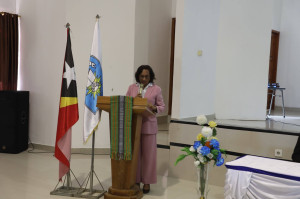
The initiative marks the formal start of the 2026 training cycle, as part of the implementation of the new Secondary School (Years 7–9) curriculum, approved at the Council of Ministers meeting on September 4th, 2024. Since its approval, progressive training activities have been conducted for teachers and trainers, with a view to its implementation in schools throughout the country.
The new national curriculum replaces the 2011 version and establishes a common framework for Primary and Secondary School (Years 1-9), aiming to update content and teaching methods to align with current needs. Its objectives include strengthening scientific and linguistic knowledge and developing skills such as analytical and critical thinking, creativity, communication, and an appreciation of cultural traditions. It also incorporates the subject “Human Fraternity, Morality, and Ethics” and introduces components such as digital literacy and the promotion of physical and mental well-being, allowing adaptation to local realities.
In her speech, the Minister noted that the curriculum and its accompanying textbooks were developed to meet criteria of scientific quality and rigour, through consultation and review processes involving various stakeholders. She emphasised, however, that the quality of the curriculum does not automatically translate into better results without adequate teacher training.
The minister indicated that this new phase of training began with a three-week training programme for trainers in Dili, followed by its rollout to municipalities and national administrative posts.
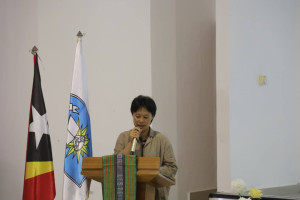
UNESCO Education Project Coordinator Hye Young (Hailey) Kim noted that this phase marks another step forward in implementing the curriculum reform for the Secondary School (Years 7–9), which began in 2024.
The new curriculum is grounded in the principles of equality, inclusion, and participatory learning. It incorporates research-based teaching methods adapted to the local context, emphasising national cultural and social dimensions.
The approach adopted promotes the development of skills such as critical thinking, collaboration, communication, creativity, and problem-solving, with practical applications within communities.
The training sessions will take place throughout 2026, with sessions scheduled across the country.
The Ministry of Education is implementing a series of measures to improve the national education system, including curriculum revisions across all levels of education, initial and continuing teacher training, strengthening merit-based teacher recruitment, replacing retiring teachers, modernising school technology, improving school infrastructure, and promoting a more inclusive education.