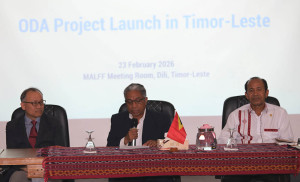
On February 23rd, 2026, the Ministry of Agriculture, Livestock, Fisheries, and Forestry (MAPPF – acronym in Portuguese) launched the Official Development Assistance (ODA) project for plastic waste management in the coastal areas of Liquiçá, Manatuto, Dili, and Ataúro, intending to reduce marine litter and protect biodiversity. 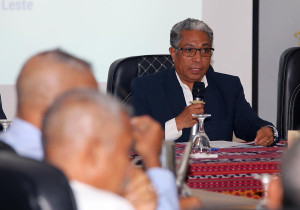
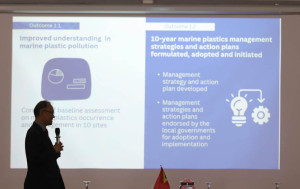
The project is being developed in collaboration with Partnerships in Environmental Management for the Seas of East Asia (PEMSEA) and is funded by US$2 million from the Government of the Republic of Korea. It is expected to run for two years. In total, it covers ten coastal areas, four in Timor-Leste and six in the Philippines.
During the launch ceremony, the responsible Minister, Marcos da Cruz, recalled that the “major programme called Blue Economy” “guides us to develop and protect our sea. However, we know that many communities still dump waste indiscriminately, which harms marine animals, especially during the rainy season.”
The minister also stressed that “we all know that the sea provides food, jobs, identity, and heritage to our nation. So, when plastic waste enters the sea, it directly threatens the foundations of the national Blue Economy.” He added that “for the Ministry of Agriculture, Livestock, Fisheries, and Forestry, this initiative is not an additional programme, but rather an integral part of our institutional mandate.”
The Minister called for the cooperation of the populations of the affected coastal areas, stating that “they should not throw plastic away indiscriminately, but place it in the designated locations so that the project implementers can collect and recycle it.”
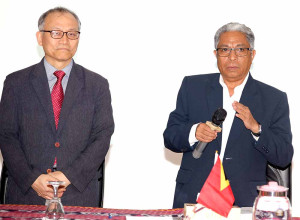
The ODA Project Manager in Timor-Leste, Won Tae Shin, emphasised that “this moment is particularly relevant, given that PEMSEA has been working for over 25 years to support integrated coastal zone management as a way of linking national policies to local actions and their respective results.” He added that the project “will not work in isolation, but in cooperation with local authorities and coastal communities, focusing on reducing plastic at its source on land, before it reaches rivers and the sea.”
The project will be implemented by MAPPF and PEMSEA, in coordination with municipal authorities, coastal communities, and students from the National University of Timor Lorosa’e and the Oriental University of Timor Lorosa’e, who will track and monitor progress on activities.
The initiative is part of public policies associated with the Blue Economy and strengthens the link between environmental management, fishing activities, and the sustainable development of coastal communities.