Since last year, the Ministry of Health has been running awareness campaigns for dengue prevention, intensifying these efforts in January to inform communities about the precautions to take to reduce the risk of disease transmission. 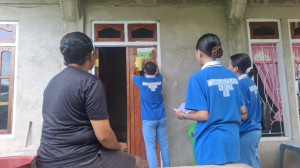
The campaigns are promoted by the National Directorate of Health Education and Promotion, in collaboration with national universities, and consist of visits to neighbourhoods and homes, where direct information is provided on dengue, its symptoms, and the main preventive measures.
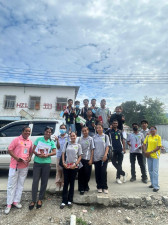
As part of these health promotion activities, the teams carried out door-to-door awareness-raising sessions, with the participation of health professionals and university students, and distributed informational leaflets to the community. These actions aim to support the population in adopting preventive practices in the home and community environments. 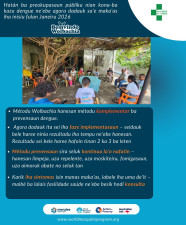
The teams also held practical education sessions on the importance of environmental cleanliness, warning of the need to eliminate standing water in containers such as buckets, cans, bottles, tyres, and other objects that could serve as breeding grounds for mosquitoes that transmit dengue fever.
At the same time, the Ministry of Health is implementing the Wolbachia method as a complementary strategy for dengue prevention. This method involves the controlled release of mosquitoes carrying the Wolbachia bacterium, which reduces the dengue virus’s ability to be transmitted to humans. By gradually establishing itself in the mosquito population, this approach enables sustained reductions in viral circulation, contributing to reduced dengue incidence in the medium and long term. The use of this method does not replace traditional vector control measures but complements environmental cleaning, mosquito net use, repellent application, fumigation, and insecticide use, among other ongoing interventions. 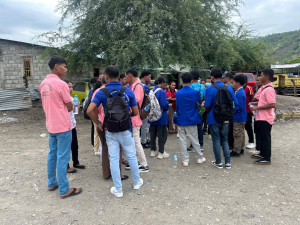
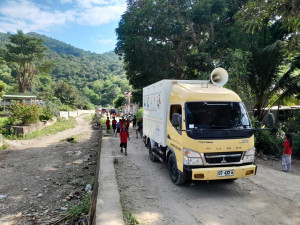
The Ministry of Health considers the involvement of higher education institutions, non-governmental organisations, local authorities, and the community itself to be a key factor in reducing the risk of dengue and improving the health and living conditions of the population.