Last Friday, the Democratic Republic of Timor-Leste commemorated the 50th anniversary of the Unilateral Proclamation of Independence, declared on November 28th, 1975, with a national programme of celebrations held across all municipalities of the country, in the Oe-cússe Ambeno Special Administrative Region (RAEOA), and in the Ataúro Administrative Authority, involving various state entities and several members of the Government. 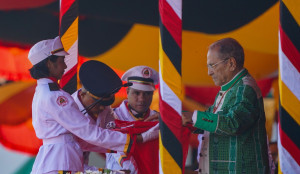
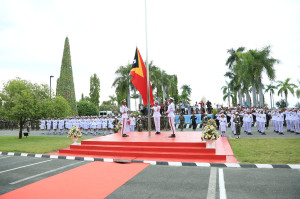
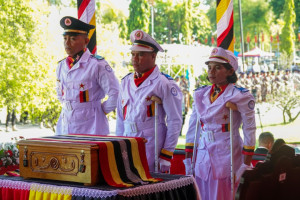
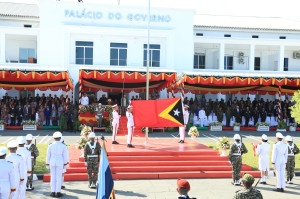
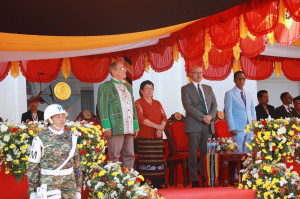
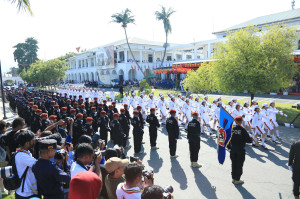
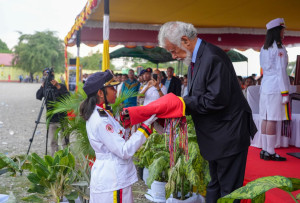
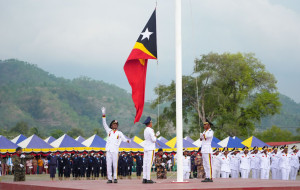
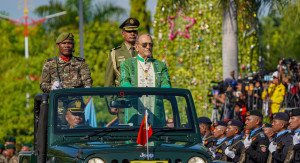
In Dili, the main ceremony took place at the Government Palace, where independence was proclaimed in 1975. The solemn ceremony of raising the National Flag was presided over by the President of the Republic, José Ramos-Horta, and was attended by the President of the National Parliament, the President of the Court of Appeal, the Vice Prime Minister, members of the Government, former heads of sovereign bodies, representatives of the Defence and Security Forces, the diplomatic corps, and international guests, including the Vice President of the Portuguese Assembly of the Republic, Rodrigo Saraiva, as well as other foreign dignitaries.
The session started with a military parade and the raising of the national flag by secondary school students from various regions of the country. This was followed by the reading of the original text of the Unilateral Proclamation of Independence of the Democratic Republic of Timor-Leste, 1975, and a minute’s silence in honour of the Heroes of the Fatherland who gave their lives for freedom and national sovereignty.
In his speech, the President of the Republic emphasised the historical significance of the date and recalled the contribution of the generations who fought for independence, stating that “today we celebrate a date that is the very breath of our national identity: the 50th Anniversary of the Unilateral Proclamation of Independence of the Democratic Republic of Timor-Leste”. He also recalled the progress achieved in recent decades, highlighting the consolidation of democratic rule of law, improvements in health and education indicators, a significant reduction in mortality, and the responsible management of the Sovereign Fund. Additionally, he emphasised the path to reconciliation, the consolidation of maritime borders, and the commitment to a sustainable development model based on economic diversification, the blue economy, and renewable energy.
President Ramos-Horta also highlighted the strategic role played by Kay Rala Xanana Gusmão in leading the liberation struggle: “He depoliticised FALINTIL, elevating it from a military arm to a national soul, transforming it into a force for all and by all”. He also stressed that “he was the strategist of the different fronts, in an epic journey that took us from the near-fatal defeats of 1977–1981 to the glorious night of May 20th, 2002”, adding that “Xanana and Timor-Leste are like the Phoenix, which, from the smouldering ashes of destruction, is reborn with broader wings and a purer soul”.
In conclusion, he called for national unity, stating: “May this day reaffirm our commitment to freedom, unity, development, and the dignity of our people. May the example of our heroes inspire every Timorese to contribute, with hard work and determination, to building a prosperous, modern, and respected Timor-Leste”.
In the Special Administrative Region of Oe-cússe Ambeno, Prime Minister Kay Rala Xanana Gusmão presided over the solemn ceremony of raising the National Flag in Pante Makasar. Before representatives of the RAEOA administrative structure, civil and military authorities, and the local population, the Head of the Government recalled the historical sequence that led to the Unilateral Proclamation of Independence on November 28th, 1975, emphasising the importance of the decisions taken at that time to assert Timor-Leste’s right to self-determination and to mobilise international support for the Timorese cause.
Addressing the citizens of RAEOA, the Prime Minister highlighted the role of the key figures from 1975 and urged the younger generations to learn about this history. He encouraged them to face current challenges with bravery, fostering social unity and regional development. The Minister of Public Works, the Vice Minister of Infrastructure, the Secretaries of State for Electricity and Water and Sanitation, representatives of local authorities, as well as citizens and representatives of partner entities, also attended the ceremony.
The 50th anniversary of the Unilateral Proclamation of Independence was also commemorated across all municipalities and at the Administrative Authority of Ataúro, with ceremonies to raise the National Flag, tributes to former combatants and martyrs of the liberation struggle, and civic and cultural events. Members of the Government travelled to the municipalities to take part in local ceremonies on behalf of the State, emphasising the national, inclusive, and decentralised character of the celebrations.
Alongside the main ceremony at the Government Palace, the commemorative programme in Dili also featured an Exhibition on the Development of Local Governance in Tasi Tolu, a Mass of Thankfulness at the Cathedral, the laying of flowers in honour of the Heroes of the Nation, and the opening of the exhibition “O Rosto da Proclamação e a Alma da Resistência” (The Face of the Proclamation and the Soul of the Resistance) at the Timorese Resistance Archive-Museum, initiatives that recalled the historical journey of the struggle for self-determination and the path to building the Timorese state.
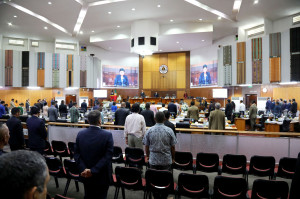
The celebrations also took place at the National Parliament, with a solemn session held on November 27th to mark the 50th anniversary of Timor-Leste’s Proclamation of Independence. On that occasion, with the participation of the Vice-President of the Assembly of the Portuguese Republic, Rodrigo Saraiva, the parliamentary groups delivered messages reflecting on the sacrifice of the Timorese people during the resistance struggle, the progress made over the past 50 years, and the future challenges of national development, reaffirming the importance of independence and democracy in the country’s political life.
Under the motto “May the celebration of these 50 years of the past give us confidence in the present and hope for the future,” the programme for the 50th anniversary of the Unilateral Proclamation of Independence reaffirmed the commitment of national institutions to preserving historical memory, strengthening democracy, promoting social justice, and building a future of peace and development for all the people of Timor-Leste.